
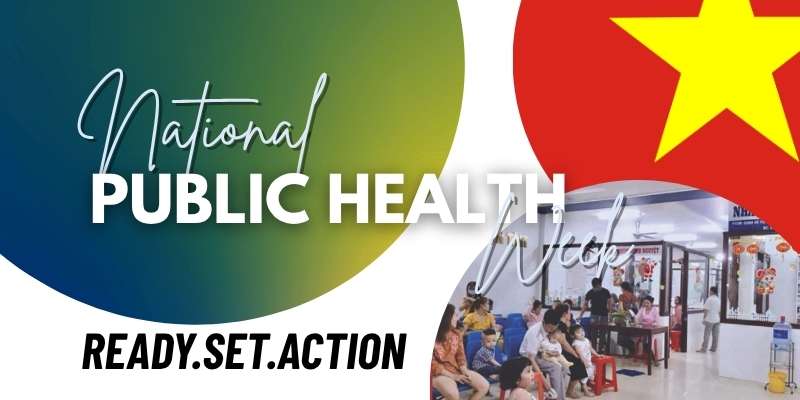
As part of our Public Health Around the Globe series, students in the HSMP 574/674 course—Minh Lam, Nina Dang, and Anne Nguyen—took an in-depth look at Vietnam’s health system and public health policies. Their informational PDF packet explores how Vietnam has structured its healthcare system, how public health is integrated across levels of care, and what lessons the United States can learn from Vietnam’s successes and challenges.
A Tiered and Integrated Health System
Vietnam’s healthcare system is overseen by the Ministry of Health and organized into four tiers: national, provincial, district, and commune. This structure allows services to be delivered close to where people live while maintaining coordination at higher levels. Commune health centers play a critical front-line role, providing essential services such as maternal and child health care, immunizations, family planning, and treatment for common illnesses.
Vietnam uses a mixed public–private model, combining government-run facilities with private providers. A cornerstone of the system is mandatory social health insurance, which now covers the vast majority of the population. Coverage is supported through employer and employee contributions alongside state funding, with full subsidies for many marginalized groups, including children under six, older adults, low-income households, and some ethnic minority populations. Vietnam is continuing to expand access, with plans to provide free annual health check-ups starting in 2026, prioritizing underserved communities.
Public Health at the Core
Public health plays a central role in Vietnam’s health system, with a strong emphasis on prevention, disease surveillance, and community-based interventions. Roughly 30% of health spending is directed toward public health activities, including immunization campaigns, hygiene education, nutrition counseling, and support services for new mothers.
Vietnam has also invested heavily in infectious disease control, developing national surveillance systems for communicable diseases and strengthening outbreak response capacity. The country’s experience with SARS in the early 2000s and its early COVID-19 response helped shape a public health approach that emphasizes early detection, clear communication, and coordinated action across government levels.
Equity, Effectiveness, and Ongoing Challenges
Using a health systems analysis framework, the students evaluated Vietnam’s system through the lenses of equity and effectiveness. Vietnam has made notable progress in improving population health outcomes, including increased life expectancy and reductions in maternal and infant mortality. Preventive care, widespread insurance coverage, and affordability have all contributed to these gains.
At the same time, the packet highlights ongoing challenges. Geographic inequities persist, with shortages of healthcare workers in rural areas and overcrowding at higher-level hospitals. While infectious disease control is a major strength, non-communicable and chronic diseases are rising, especially in rural communities. Out-of-pocket costs also remain a concern, accounting for a significant share of total health spending.
Lessons for the United States
The students’ analysis points to several areas where the U.S. could learn from Vietnam’s experience, including:
- A strong prevention-first public health strategy
- Population-oriented health policies supported by clear communication
- A mixed public–private model that promotes affordability and competition
- Policy actions addressing emerging health risks, such as Vietnam’s recent ban on e-cigarettes to protect youth health
Want to Learn More?
The full informational packet provides deeper analysis, historical context, data visualizations, and detailed references for those interested in Vietnam’s health systems, equity, and policy innovation.