
Public Health Around the Globe: There’s Better Health In Australia Mate!
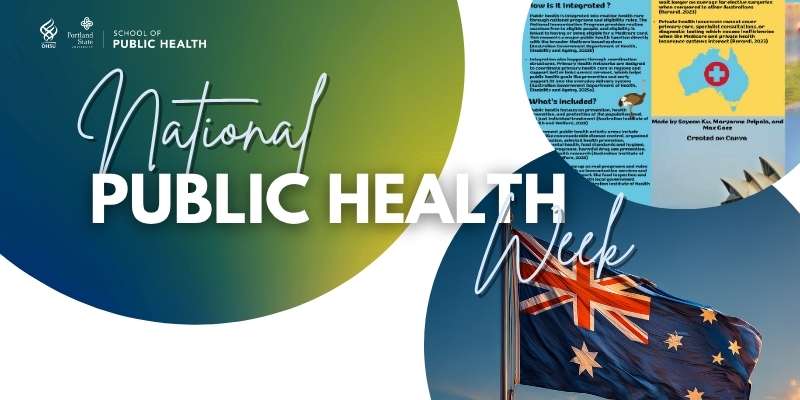
As part of our Public Health Around the Globe series, HSMP 574/674 students Soyeon Ku, Maryanne Pelpola, and Max Goss took a deep dive into Australia’s public health system. Examining how it is organized, funded, and delivered, and what lessons it might offer other countries.
Their brochure, “There’s Better Health in Australia, Mate!”, breaks down how public health in Australia is a shared responsibility across national, state, territory, and local governments. Students highlight the role of Medicare as a universal, tax-funded foundation that ensures access to essential health services, alongside key programs such as the National Immunisation Program and the Pharmaceutical Benefits Scheme, which help keep preventive care and medications affordable.
The project also explores how public health is integrated into everyday health care through Primary Health Networks, which coordinate regional services and support prevention, early intervention, and population health planning. Together, these structures support strong outcomes in equity, efficiency, and access, particularly compared with other high-income countries.
The brochure also critically explores the “fine print.” Discussing ongoing challenges, including gaps in dental coverage, rural access issues, and inequities experienced by Aboriginal and Torres Strait Islander peoples. The students also reflect on what the U.S. could learn from Australia’s approach. Especially when it comes to universal coverage, cost control, and treating health care as a public good.
Want To Learn More?
We encourage you to download the full student-created brochure to explore Australia’s public health system in greater detail and see how global models can inform future public health practice.
Created by HSMP 574/674 students Soyeon Ku, Maryanne Pelpola, and Max Goss.