
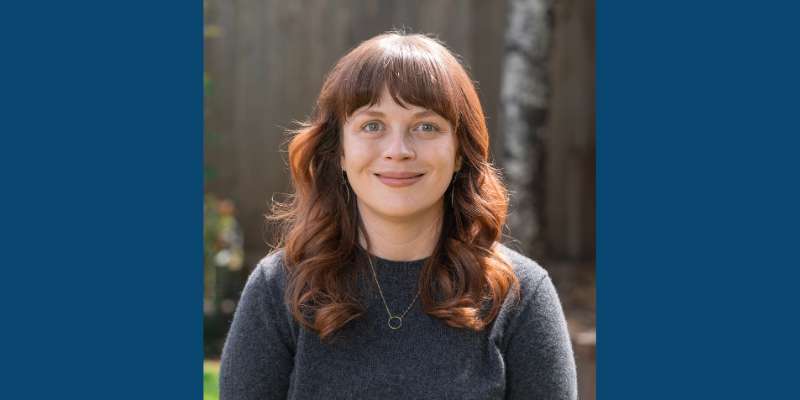
Graduate Spotlight: Samantha Arneson
Samantha Arneson pursued a Master of Public Health (MPH) in Public Health Practice after years of working as a dental hygienist within Indigenous communities and nonprofit settings. Her path to public health was deeply personal, shaped by her own experiences navigating public health and social services as a young mother growing up in a low-income community.
“Public health and social services were a constant in my life growing up and well into my twenties,” Samantha said. “I wanted to serve patients who were navigating the same circumstances I had lived through.”
After seven years in clinical care, Samantha recognized a recurring challenge that inspired her to expand her work beyond direct patient care: health literacy. While she valued the importance of clinical treatment, she became increasingly passionate about helping patients truly understand their health information and feel empowered to make informed decisions about their care.
“My goal is to bridge the communication gap between providers and patients,” she said. “I want people to have the clear information they need to exercise full autonomy and give truly informed consent for their own care.”
Long before beginning her MPH program, Samantha discovered that public health offered her something she could not always find in private practice: the ability to prioritize trust, safety, and patient-centered care without pressure to “sell” treatments or procedures. She considers the relationships she built with patients one of the proudest accomplishments of her career.
“My proudest achievement is the trust I’ve built with patients who shared that they finally felt safe in a dental chair,” she said. “I’ve learned that a truly impactful public health intervention is often as simple as making someone feel safe enough to ask a question.”
During her MPH program, Samantha completed a preceptorship with the Northwest Portland Area Indian Health Board, where she deepened her understanding of community resilience and Indigenous health systems. Attending the Portland Area Dental Meeting and collaborating with Tribal and Indian Health Service clinic professionals across the Pacific Northwest further strengthened her commitment to culturally responsive health communication and community-centered care.
Samantha’s journey through graduate school was far from traditional. After taking eight years away from school, she balanced coursework alongside full-time work, two jobs, and raising two teenage sons. At times, she struggled with imposter syndrome and questioned whether she belonged in graduate school at all.
“After my first term, I felt like I didn’t quite fit in,” she said. “I wasn’t sure if my perspective was really what the program was looking for.”
After stepping away from the program for several terms, Samantha eventually returned and found renewed confidence through the support of her community and receiving the Dean’s Scholarship. That experience helped her recognize the value of her lived experiences and nontraditional path.
“I finally understood that public health needs multiple points of view,” she said. “I’ve realized that my non-traditional background is actually my greatest strength.”
Throughout her journey, Samantha found mentorship and encouragement from faculty, colleagues, and community leaders who helped her navigate the transition from clinical practice into the broader professional public health world. She especially credits Andrea Griggs, Ticey Mason, and Alice Gates for helping her build confidence and recognize the value of her perspective and background.
“My mentors helped me realize that coming from a small town and having a clinical background are valuable assets I bring to this field,” she said.
Samantha also credits her family as the foundation that made her success possible. Her husband and two sons supported her throughout long nights of studying, balancing work responsibilities, and navigating graduate school.
“Grad school, two jobs, and family are a lot to juggle,” she said. “I definitely wouldn’t have made it through the program without everyone in my corner.”
Following graduation, Samantha will remain at OHSU as the AI/AN Learning Manager for the Northwest Native American Center of Excellence. In her new role, she will support American Indian and Alaska Native students through culturally rooted curriculum development, mentorship, and educational programming. She also plans to continue developing a dental education app designed to improve communication and understanding within clinical settings.
Looking ahead, Samantha hopes to continue creating spaces where patients, students, and providers feel respected, heard, and empowered.
“To me, public health is about showing up for the community and ensuring that no one feels overlooked or unheard,” she said.