
Strengthening the Frontlines: How Oregon’s Center of Excellence is Shaping the Future of Older Adult Behavioral Health
As Oregon’s population of older adults continues to grow rapidly, the need for targeted, equitable behavioral health support has never been more urgent. Across the Pacific Northwest, communities are confronting a complex mix of challenges—ranging from social isolation and loneliness to substance use disorders and serious mental illness in later life.
At the heart of the statewide response is Oregon’s Center of Excellence for Behavioral Health & Aging (OCEBHA). A joint collaboration bringing together the OHSU-PSU School of Public Health, PSU Institute on Aging, PSU School of Social Work, and OHSU School of Medicine, OCEBHA was established as part of a statewide response to build a resilient workforce and expand behavioral health access across Oregon.
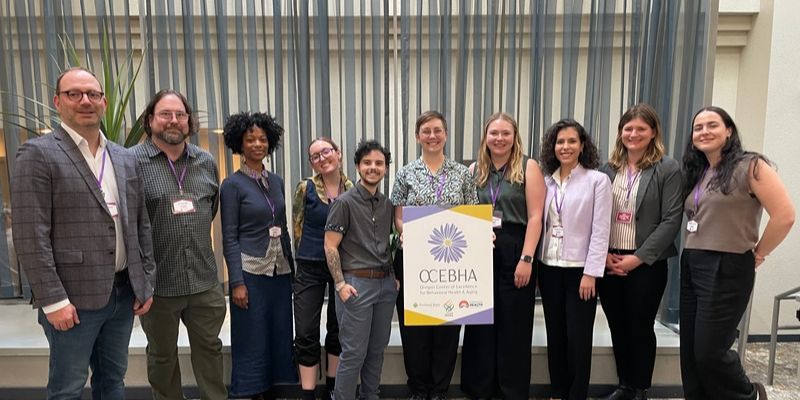
Following its successful third annual Behavioral Health & Aging Conference, in Wilsonville Oregon this past September, OCEBHA Co-Director Walter Dawson, DPhil sat down to debrief on the outcomes of the event, ongoing community initiatives, and the strategic road ahead.
Navigating the Intersection of Justice and Dignity in Older Adult Behavioral Health: The 3rd Annual Conference
This year’s annual conference marked another major milestone for the organization, drawing close to 300 attendees—reflecting steady year-over-year growth. Gathering professionals from across geriatric care, mental health, substance use, and social services, the in-person multi-day event highlighted a clear goal: providing the opportunity to network, learn from leading professionals, and gain or strengthen skills needed to support the behavioral health needs of older adults across care settings throughout Oregon.
Keynote and featured speakers from across Oregon, Washington, California, Idaho and Maine underscored the need to elevate aging issues in state legislatures. Notably, Idaho’s Senate Minority Leader, Melissa Wintrow and Brooke Amrbose, the Alzheimer’s Disease and Related Dementias (ADRD) Program Manager Division of Public Health highlighted work in their state surrounding civil commitment processes and urged attendees to actively engage their local elected officials. Other sessions tackled critical intersections between geriatric behavioral health, housing insecurity, and unsheltered populations.
Reflecting on the core priority that emerged from the event, Dawson emphasized the critical need for engaging in the direct education of policymakers and other decision makers on the specific behavioral health needs of older adults:
“Our central call to action coming out of this conference is raising awareness. Speakers across Oregon, California, Washington, and Idaho all pointed to the same imperative: we must actively educate key decision makers about the unique behavioral health needs of older adults if we are going to drive meaningful systemic change.” — Walter Dawson, DPhil, Co-Director, OCEBHA
Year-Round Momentum: Webinars and the New Behavioral Health Asset Map
To ensure attendee engagement and learning continue beyond the annual conference, OCEBHA has instituted several continuous support initiatives:
- Monthly Webinar Series: Held on the last Wednesday of each month, these 90-minute virtual sessions feature local and national experts addressing topics ranging from problem gambling in older adults to specialized clinical interventions. Professionals attending can earn Continuing Education Units (CEUs) and Continuing Medical Education credits (CMEs).
- Behavioral Health Asset Map: Now live on the OCEBHA website, this interactive, searchable directory allows users to filter resources by topic (such as workforce training, social services, or healthcare) and geographic location via zip code.
“What made this space so impactful was bringing together people from across interconnected fields into one shared environment—from healthcare providers and behavioral health specialists to social workers and families supporting older adults. Rather than a hierarchical approach where institutional leaders educate from positions of power, experts from every level of experience came together to share, learn, and build a network of support that reaches far beyond any institution” — Juell Towns, MPH, SPH alum and Project Manager of OCEBHA
While OCEBHA’s primary focus remains on workforce development, Dawson highlighted that the Asset Map serves a broader community purpose:
“While our main focus is developing the paid workforce, the Behavioral Health Asset Map was built to be publicly accessible so that anyone—whether you are a provider, a family member, or a neighbor—can easily locate essential behavioral health resources across Oregon.” – Walter Dawson, DPhil, Co-Director of OCEBHA
Prioritizing Rural Oregon: The Upcoming Senior Center Symposium
Looking ahead to late March, OCEBHA is launching a targeted symposium focused on staff and volunteers who manage senior centers and community hubs across Oregon.
Rural communities in Oregon are aging at a significantly faster rate than urban centers, yet they frequently face severe shortages of specialized behavioral health providers. Senior centers serve as vital social infrastructure in these regions—delivering both formal evidence-based programming and informal social connections that directly combat loneliness and isolation, two leading risk factors for mental health decline in older age. Dawson shares why rural representation is at the heart of this upcoming effort:
“Rural communities in Oregon are aging at a much faster rate than urban areas, and senior centers serve as vital social hubs in those regions. Ensuring strong rural representation at our upcoming symposium in the Columbia River Gorge is essential to addressing the unique gaps and needs these communities face every day.” — Walter Dawson, DPhil, Co-Director of OCEBHA
To maximize accessibility for rural leaders, the symposium will be held in the Columbia River Gorge. Designed to identify service gaps, share best practices, and enhance local programming, the event will leverage expertise from rural engagement leaders to ensure strong statewide representation.
Building a Unified Path Forward
Through its blend of academic rigorous research, workforce education, and grassroots community outreach, OCEBHA continues to advance professional development and community engagement to further support Oregon’s older adult population. By empowering both urban and rural care providers, educating lawmakers, and equipping community centers with practical tools, the Center is paving the way for a more integrated and compassionate public health system.
For more information on upcoming training sessions, webinar registrations, or to explore the interactive Behavioral Health Asset Map, visit ocebha.org.
To learn more about the center’s founding mission and leadership, watch the Oregon’s Center of Excellence for Behavioral Health & Aging Introduction. This video directly introduces OCEBHA’s leadership and core goals in addressing older adult mental health in Oregon.